Garage Floors
Epoxy vs. Polyaspartic Garage Floors: What Actually Holds Up to Texas Heat
By Iron Pecan Team · Published November 21, 2026 · Updated November 21, 2026 · 4 min read
On this page
If you live in Frisco, Prosper or anywhere in North Texas, your garage floor deals with something most online guides ignore: heat. Summer afternoons push past 100°F, tires come off the Dallas North Tollway hot, and an attached garage can stay warm well into the night. An epoxy vs polyaspartic garage floor comparison needs to account for those conditions, not just the color on a sample board.
The coating you choose helps decide whether your floor still looks great years from now or starts peeling where you park. Preparation, product selection and the complete coating system matter more than a single product name.
What is epoxy?
Epoxy is a two-part resin that bonds very well to properly ground concrete. It builds thickness, fills small surface imperfections and makes an excellent base coat. Its weak points are UV exposure and heat: some epoxies can yellow where sunlight hits, while thin or low-quality coatings may soften under hot tires.
A professional epoxy base is different from a thin paint-like kit. The slab must be inspected, prepared and dry enough for the specified system. Putting more resin over a poorly prepared surface does not solve an adhesion problem.
What is polyaspartic?
Polyaspartic is a type of polyurea coating. It is more flexible, UV-stable and has higher heat tolerance than standard epoxy. A UV-stable topcoat helps the floor stay clear when your garage door is open to afternoon sunlight. It also cures faster.
The trade-offs are higher material cost and a short working time. Application requires an experienced crew that understands the product, temperature and humidity. Faster curing is a material characteristic, not a promise about your project's schedule.
Hot tire pickup: a common Texas garage failure
Hot tire pickup happens when warm tires soften a coating and pull it up as the car moves or cools. It leaves peeled patches under the wheels. Two common contributors are a coating that cannot tolerate heat and, very often, poor surface preparation.
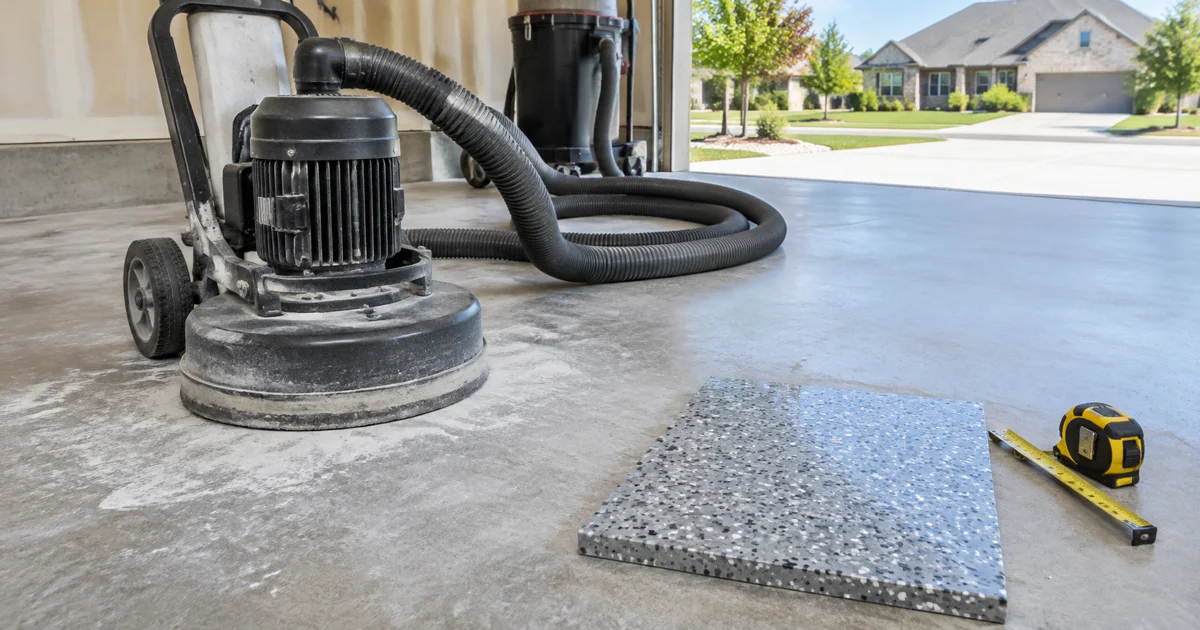
A slab that was only acid-etched or painted over may give the coating too little to grip. Old sealers, oil and a weak concrete surface also interfere with bonding. When comparing an epoxy vs polyaspartic garage floor, ask about diamond grinding before discussing colors.
Side-by-side comparison
| Feature | Epoxy | Polyaspartic |
|---|---|---|
| Heat resistance | Moderate; varies by product | High; varies by product |
| UV stability | Can yellow | Stays clear with a UV-stable formulation |
| Bond and build | Excellent base coat | Excellent topcoat |
| Flexibility | More rigid | More flexible |
| Material cost | Lower | Higher |
| Best use in our hybrid system | Base coat | Protective topcoat |
Our recommendation: a hybrid full-flake system
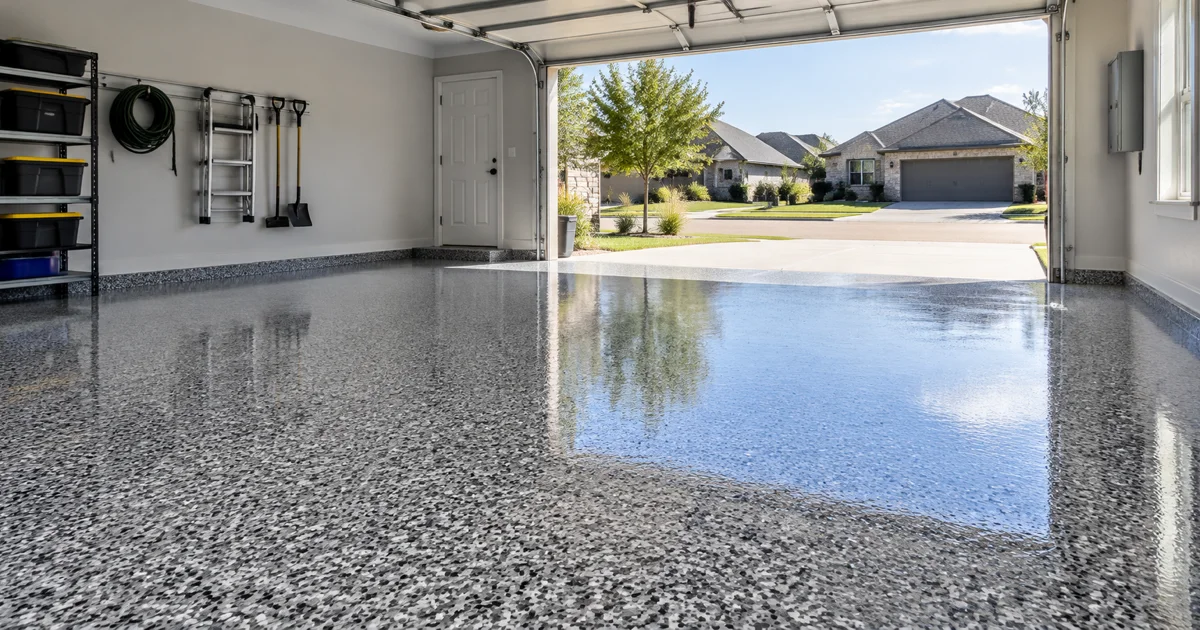
Our recommendation brings the materials together: diamond grinding, crack repair, an epoxy base coat, a full broadcast of decorative flakes and a polyaspartic topcoat. Epoxy supplies bond and build; polyaspartic protects against heat, UV, chemicals and hot tires.
We use professional-grade Versatile materials. Every project begins with a moisture test so we know whether the slab needs a moisture-mitigation primer. The epoxy vs polyaspartic garage floor decision is about selecting compatible layers for your actual concrete, not simply choosing the fastest product.
Why North Texas slabs need extra attention
Much of Collin and Denton County sits on expansive clay soil, so hairline cracks and moisture vapor are common in garage slabs. Grinding, filling cracks and testing moisture are not optional shortcuts: they establish the foundation for the coating.
Surface crack repairs can make a floor more uniform, but no coating fixes structural slab movement. We discuss visible damage during the estimate and explain where a separate structural assessment may be appropriate.
How to keep your coated floor looking new
- Sweep or blow off grit regularly so it does not act like sandpaper.
- Rinse with water and a pH-neutral cleaner rather than harsh chemicals.
- Wipe up oil and chemical spills promptly.
- Squeegee standing water after rain or car washing.
- Protect the floor before moving heavy metal equipment.
Even a tough coating benefits from sensible care. Follow the maintenance and cure instructions supplied for your finished floor, including the timing for foot traffic and parking.
Ready to compare an epoxy vs polyaspartic garage floor for your home? Get a free garage floor estimate, or see our epoxy coating options. For budget planning, read our 2026 Frisco garage floor cost guide.